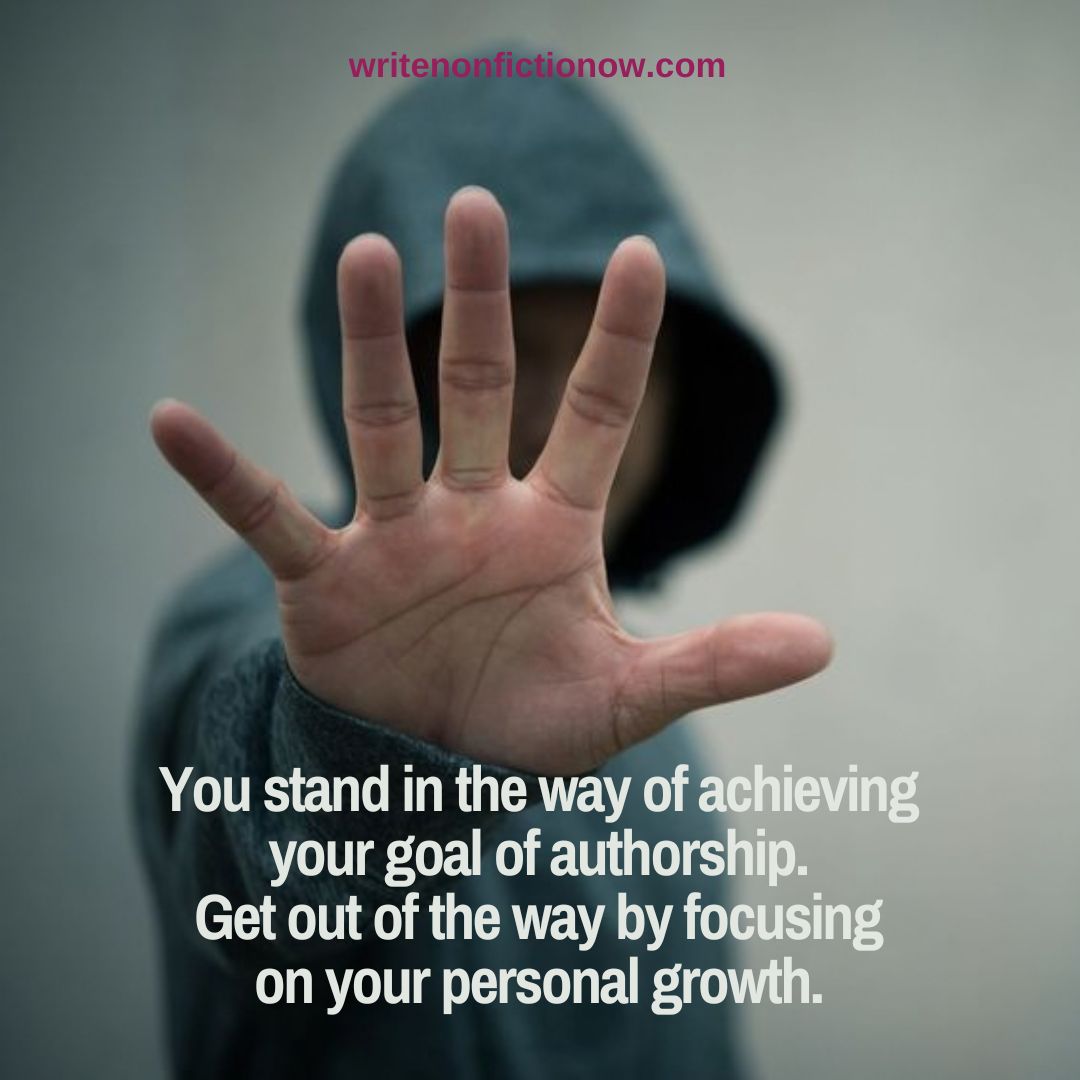
Too many aspiring authors never become published authors. Many reasons might lead to this unfortunate outcome, and writers often use them to excuse their inability to achieve their publishing goals. But, typically, the only thing that impacts their ability to achieve authorship is themselves.
As a Certified High-Performance Coach and Transformational Coach, I repeatedly see authors standing in the way of their own success. However, using some powerful personal growth tips can help you transform from an aspiring author to a published one.
As with all personal growth, you get out of it as much as you put in. Commit to your growth, use these tips consistently, and decide right now to be an author.
1. Don’t give up on yourself.
It’s easy to become discouraged and to give up on your writing project and dream of authorship. Giving up on that goal is the same as giving up on yourself.
Be your biggest cheerleader. You can’t rely on other people or publishing professionals to cheer you on, bolster your self-confidence, or raise your self-esteem. You have to do it yourself.
You can do this in a variety of ways, such as using affirmations, vision boards, self-hypnosis, and visualization. Ultimately, you must give yourself pep talks. And you must force yourself to sit down at the computer and write. Then, take bold action and courageously submit your work.
Be your own accountability partner. And push yourself until you get your work published.
2. Don’t let anyone tell you that you can’t become an author.
People often say it’s difficult to become an author. Some will even declare that you can’t achieve that goal.
That’s not true.
Today, it’s easier than ever to become an author, especially if you choose to self-publish. So, don’t let other people’s opinions and beliefs deter you.
What they say about your goal demonstrates more about them than it does about your ability to become an author. Keep that in mind.
You have two choices:
- share your goal with others and ignore their negative responses, or
- keep your publishing goals to yourself, thereby eliminating the opportunity for others to say you can’t become an author.
If you don’t believe you can let other people’s opinions run off like water on a duck’s back, then it’s best not to tell them about your goals. And if you know someone will offer a critical viewpoint, that’s not a “safe” person with whom to share your aspirations.
3. Be a writer.
Lots of people tell me they are writers, but they don’t write. If you want to become an author, first and foremost, you have to be a writer. Take on this identity, because writers write.
Reverse that: You have to write to be a writer. So, start writing consistently. That’s how you become a writer.
Decide how much writing you will produce each week. Will you write a page or 1,000 words per day? Will you write for two hours three times a week? Or will you choose to write daily until you can’t write anymore?
Whatever you decide is fine, but commit to that activity. Write consistently. Be a writer.
4. Be an author.
In addition to adopting the identity of “writer,” you must also be an author. Authors publish their work, so you need to be someone who publishes your writing.
Find a way to begin publishing your work. For instance, start a Substack newsletter, a blog, or write short books and publish them on Kindle.
Find a way to get your written work into the hands of readers.
5. Don’t get advice from too many experts.
In an attempt to learn how to become an author, many writers find themselves following a variety of so-called experts, some of whom might actually know what they’re talking about and some of whom may not. But if they follow too many different teachers, they eventually become confused and overwhelmed.
If you can relate, it’s time to choose one or maybe two writing and publishing experts to follow. If you’re unsure who to listen to or who’s providing the best information, ask around. Join writers’ groups or ask authors for recommendations.
And find someone who has “been there and done that”—an actual author.
6. Develop an Author Attitude.
To become an author, you must have an Author Attitude. I wrote about this concept in my book the *Author Training Manual.*
I use the acronym WOOT to describe an Author attitude. It stands for:
- willingness
- optimism
- objectivity
- tenacity
You need willingness to see your work from a different perspective, learn new skills, and tackle tasks necessary for authorship—even if they’re not ones you enjoy or that fall into your zone of genius.
Becoming an author is a tough row to hoe. Rejection, criticism, and required activities make it hard to keep moving toward your goal—unless you develop an optimistic outlook. Optimism prevents you from becoming negative and quitting.
Objectivity helps you read through an editor’s comments on your manuscript without taking those notes personally. The same is true for receiving rejection letters from agents or publishers—you must learn to see your work from their perspective.
Even when you’re writing or revising your work, you must be able to step back and take a big-picture perspective. That allows you to craft a better book.
Lastly, you need tenacity. The only way you’ll go from aspiring to published author is to refuse to give up…no matter what. Be someone who refuses to quit on yourself and on your dream of authorship.
The Key to Authorship Success
I’m a firm believer in personal growth for everyone not just writers and authors. However, as a writer, author, and author coach, I personally see the benefit of “working on yourself.”
Most of us have negative stories and beliefs about who we are and what we can do. Sometimes we need a coach to help us see those blind spots.
No matter how you approach your personal development, you must change your beliefs about yourself, and, therefore, your identity. Do that, and you’ll quickly develop the mindset and habits to succeed as an author.
I talk a lot about identity because who you are being dictates your habits and mindset. You need to be an author in mindset and habit before you can become an author.
Identity comes first. Achieving your authorship goal comes second.
Most people have this process backward. They believe they must get published to be an author.
By being an author, first, you develop the behaviors and ways of thinking that make you an author. You may not be published yet, but believing you are already an author helps you achieve your publishing goals.
Ultimately, when you engage in personal growth, you learn how to get out of your own way. You stop being the obstacle to becoming a writer and author. And that’s the key to your success.
Do you believe you are in your own way, and how will you get out of the way so you can become an author? Tell me in a comment below. Also, please share this post with a writer who would benefit from reading it.

Would you like to write and publish nonfiction books…and become a successful (and productive) author? Join the Nonfiction Writers’ University. Get the comprehensive education you need and author coaching to help you succeed as a nonfiction writer.
If you’ve wanted to get coached and be supported as you pursue authorship, this program is for you. Participate in monthly group Author Coaching sessions and gain access to 60+ interviews with publishing experts, including foundational courses. Learn more here.
Image courtesy of mhyimge.
Leave a Reply